Handrail LED lighting brings focus to a feature you already use every day. A well-planned recess keeps the strip discreet while leaving the grip and supporting structure intact. Consider the lighting alongside the handrail manufacturer or joiner before selecting your strip and housing.
Hallway and staircase inspiration
Consider the detail. See the wider space.
Explore related lighting ideas for the way the space is used. These concepts illustrate design possibilities, not a specified product, verified installation or exact colour output.
Lighting conceptThe rhythm of the stepsMeasure and assess each tread and its proposed lighting detail.Lighting conceptA continuous journeyConsider how the entrance, flight and landing read together.
Bring the idea back to your own surfaces, dimensions and preferred lighting mood.
Plan the lighting position, mounting and complete system around the actual space and the way it is used.
Protect the handrail design
Start with the rail section, bracket positions and the manufacturer-approved space for lighting. Never assume a finished rail can be routed without affecting its strength or fixing arrangement. Check the proposed light line from the lower steps and landing. Leave the handrail comfortable to grip, with no exposed cables or protruding components.
Plan around brackets and bends
Measure straight sections individually and record turns, returns and interruptions at brackets. A flexible strip still has specified bending limits and connection requirements; tight corners may need separate pieces and cable links. Identify where cables leave the rail and how they reach an accessible supply without crossing the handhold.
Send the section as well as the length
For a quote, include a rail cross-section, photos, straight-run lengths, bracket spacing and the available cable route. State whether the accent should dim or work with a compatible sensor. Have the installation assessed with the staircase lighting as a whole; decorative handrail lighting does not replace required safety or emergency lighting.
Choose the mood
One space. Different ways to light it.
Choose the lighting effect first, then check the strip, controls and installation together. These swatches explain the choices; they are not photographs of a product’s light output.
WW
Warm white
A softer white-light mood. Compare a sample with the materials and other lighting in your room.
What about RGBW? RGBW combines colour with a separate white channel. The white tone and control options depend on the product. Compare RGB and RGBW strip options and check the complete system.
Swatches are illustrative, not exact colour temperatures. Screens, surfaces and installation details change how light appears. Colour availability and suitability vary by selected product.
Explore the products
Find the parts for your lighting detail.
These products are starting points for sheltered dry indoor accent details. They do not establish a walk-on, structural, safety-lighting or emergency-lighting solution. Check the complete installation with the relevant supplier and installer.
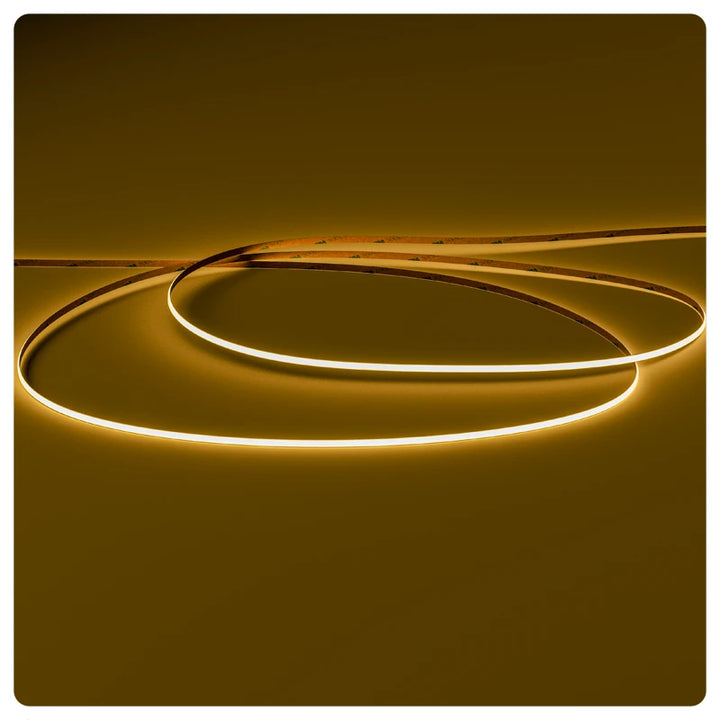
Seamless Warm White LED Strip, 4mm, 24V, 2700K
The 4mm format is an option to assess for a manufacturer-approved narrow handrail recess.Confirm structural permission and room for cable connections; strip width alone does not establish a suitable rail detail. This strip requires soldered connections.
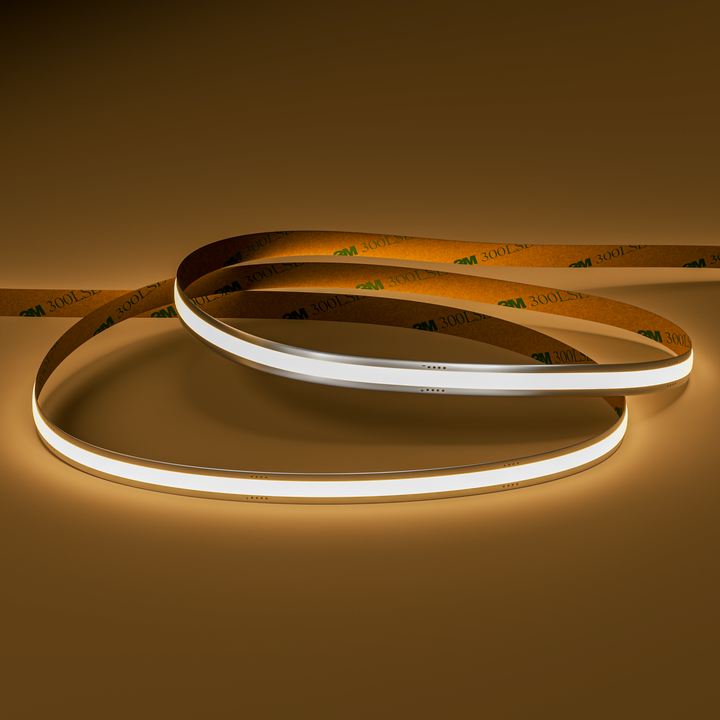
A fixed warm-white option where the approved rail detail has space for an 8mm strip.For dry indoor use with a suitable 24V supply; verify concealment and bending limits.
A recessed housing to assess in sufficiently sized, approved joinery below a handrail.Confirm the full profile dimensions and recess with the rail supplier before routing; this is not a handrail component.
These are individual products, not a complete lighting kit or a checked bill of materials. Confirm strip, profile, power, controls, connections and installation requirements together. Product imagery does not identify the products used in the lighting concepts.
Can I add lighting to an existing wooden handrail?
Possibly, but have the manufacturer or a suitable professional assess the rail before any routing or drilling. The lighting recess must not compromise the handrail, its grip or its fixings.
Can the strip follow a curved bannister?
That depends on the strip bending direction and permitted radius, as well as the rail shape. Send a drawing of the curve; do not twist or sharply fold strip to force it around a turn.
Where should the power supply go?
Choose an accessible location with the required installation clearances. Plan the low-voltage cable route to the rail before closing the wall or joinery, and have the electrical arrangement checked by your installer.
Will one strip length cover the whole staircase?
Only if the geometry and the product run limits allow it. Brackets, corners and landings may require separate runs, with a feed arrangement designed for the complete route.